can ai book seller appointments automatically Explained
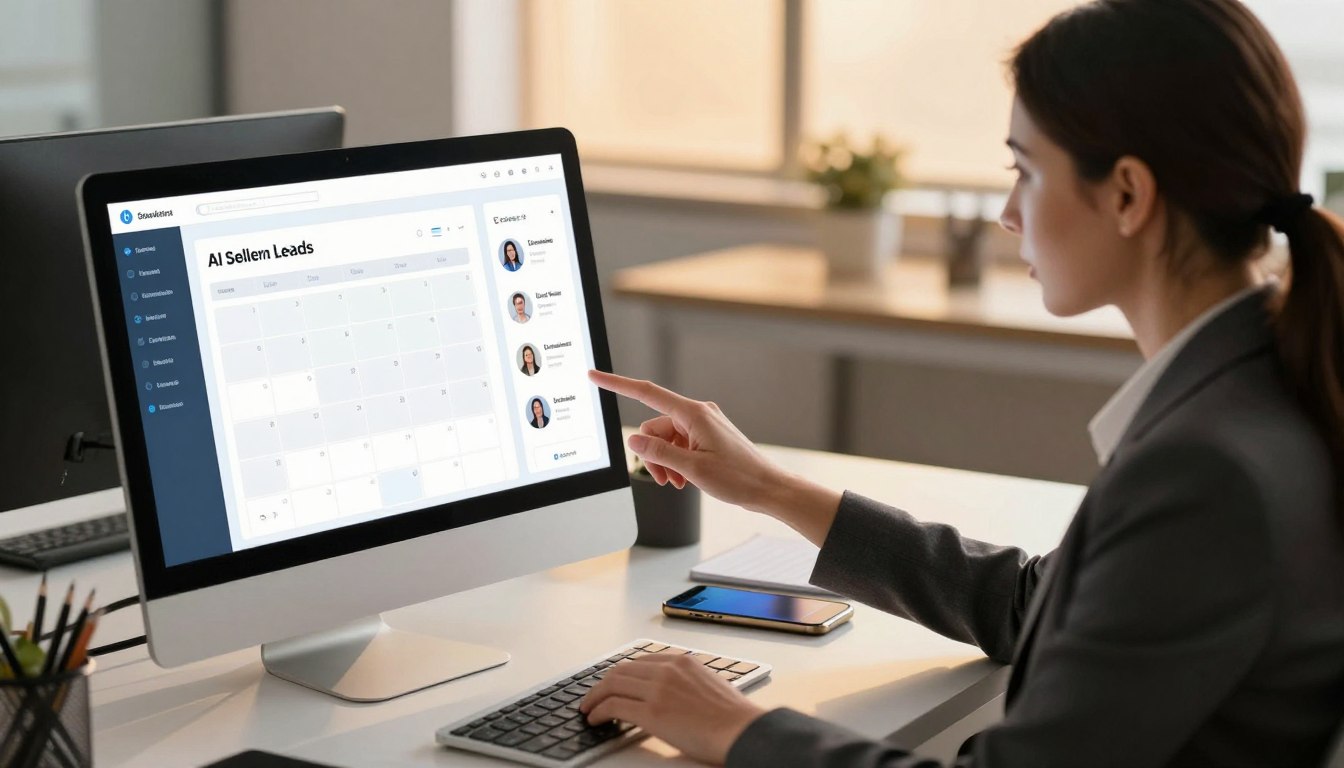
Few moments matter more in sales than the first reply. A warm lead may lose interest while a team member checks a calendar or returns a call. For Singapore businesses, fast and clear scheduling helps protect that opportunity and create a better customer experience.
This guide explains how AI connects lead conversations with qualification steps, calendars, and confirmed meetings. A reported response time of less than 60 seconds helps keep interested prospects engaged. Reported results also include an 85% booking rate and a 40% reduction in no-shows.
Across WhatsApp, SMS, email, and voice, automation supports consistent conversations throughout the day. It helps teams improve efficiency, support sales, and grow revenue without adding staff too soon. Explore our real estate appointment setter to see how the workflow fits seller outreach.
Key Takeaways
- AI links lead conversations with qualification and calendar scheduling.
- Less than 60 seconds of response time helps protect warm leads.
- An 85% reported booking rate supports stronger sales efficiency.
- A reported 40% drop in no-shows improves the customer experience.
- WhatsApp, SMS, email, and voice support one connected booking journey.
- Human judgment remains central to offers, meetings, and business decisions.
Can AI Book Seller Appointments Automatically?
Yes. A smart sales workflow moves from interest to a confirmed time with fewer delays. It reads replies, checks intent, and guides each lead toward a useful next step.
How AI Qualifies Leads Before Booking
Before appointment booking, the system asks about needs, buying intent, budget, and availability. These short conversations support lead qualification and help teams focus on suitable sales opportunities.
- Need and service fit
- Purchase intent and timing
- Preferred meeting channel
How AI Books Meetings Directly Into Your Calendar
After qualification, the scheduler checks calendars and offers 2 p.m., 3 p.m., or 4 p.m. The customer selects 3 p.m., and the system confirms the meeting. WhatsApp, RCS, SMS, email, Telegram, iMessage, and voice all support this flow.
In HighLevel, teams use Voice AI Agents, Agent Goals, New Action, and Book Appointment. Email alerts, custom prompts, prompt guidelines, and a Knowledge Base improve accuracy.
“A clear next step turns interest into action.”
| Stage | System action | Business value |
|---|---|---|
| Qualification | Checks need and intent | Better sales focus |
| Scheduling | Offers open times | Faster booking |
| Confirmation | Sends meeting details | Stronger revenue follow-through |
Why Singapore Businesses Are Automating Appointment Scheduling
Singapore’s fast-moving market rewards businesses that respond while interest is fresh. A prompt reply within seconds gives each lead a clear path forward, instead of leaving prospects waiting for delayed calls.
For many teams, manual scheduling takes valuable time. Staff must compare calendars, return calls, and manage changes by hand. Automation reduces this effort, so sales professionals focus on qualified leads and meaningful conversations.
Reducing Missed Leads and Manual Scheduling
An inbound inquiry may arrive after office hours. With 24/7 availability, the system responds to scheduling requests throughout the day. Regal reports more than 10 million ROI-positive conversations each month, showing the scale that digital engagement may support.
- Faster replies protect buyer intent.
- Calendar access reduces scheduling delays.
- Clear reminders support confirmed bookings.
Improving Speed to Lead and Customer Experience
Quick replies create a smoother customer experience and help protect sales revenue. For Singapore businesses, this steady process improves efficiency without adding staff too soon. It also keeps every appointment request moving toward a useful next step.
| Business challenge | Automation response | Practical result |
|---|---|---|
| Delayed callbacks | Reply within seconds | Higher lead engagement |
| Calendar conflicts | Live availability checks | Faster booking |
| After-hours inquiries | 24/7 response coverage | More sales opportunities |
How AI Appointment Booking Works
We follow a simple path from a new inquiry to a confirmed meeting. Each step keeps the customer informed and gives the sales team useful context.
Instant Conversations Across Voice, WhatsApp, SMS, and Webchat
When a lead arrives, the system starts a conversation within seconds. Voice, WhatsApp, SMS, and webchat offer quick ways to share needs, answer basic questions, and identify intent.
Availability Matching, Calendar Syncing, and Confirmations
After lead qualification, the scheduler checks team availability. It connects with Google Calendar, Microsoft Outlook, Calendly, or custom APIs. Then, it books meetings directly into an open time and sends a calendar invitation.
Reminders, Rescheduling, and Human Handoff
Text or voice reminders support confirmed appointments. Customers may request a new time without starting over, while the system updates connected calendars. Complex questions move to the right team member for personal support.
“The best scheduling experience feels simple from the customer’s point of view.”
This connected workflow turns appointment booking into a steady process, not a series of manual calls. It also gives teams a clear record of each conversation and meeting.
AI Booking for Store Appointments and Home Visits
Customer journeys often span a branch, a showroom, or a doorstep. We help businesses match each request with the right location, appointment type, and available team member. This creates a smoother path for retail, healthcare, banking, automotive, and wellness services across Singapore.
Matching Customers With Locations and Staff Availability
Customers choose a nearby store and a suitable time. Live availability helps prevent double-booking while staff schedules stay balanced. Confirmations and reminders support attendance, while walk-in data helps each branch manage demand with greater efficiency.
- Location selection for convenient visits
- Staff availability for accurate appointment choices
- Flexible options for walk-ins and scheduled visits
Optimizing Travel Time for Field Service Teams
For home services, solar installation, insurance, real estate, and field sales, route planning matters. The Google Distance Matrix API compares travel distance between customer addresses. A practical schedule may start at 9:00, followed by visits at 9:30, 10:15, 11:00, and 11:45.
Geographic clustering and flexible customer windows reduce wasted travel. The result is stronger service quality, better sales coverage, and healthier revenue potential.
“The right route gives every customer more value from every visit.”
Calendar, CRM, and Scheduling Tool Integrations
Reliable integrations give every sales conversation a clear next step. They link customer data, real-time availability, and team workflows across one connected system.
Google Calendar, Microsoft Outlook, and Calendly Connections
Google Calendar, Microsoft Outlook, and Calendly help agents review open slots before confirming an appointment. A second Google Calendar check helps avoid conflicts across shared calendars. This supports faster scheduling, accurate booking, and fewer missed meetings.
- Live calendar availability for each team
- Shared calendars for staff and locations
- Reminders linked to confirmed appointments
CRM, ERP, API, and Webhook Integrations
CRM and ERP connections give systems access to lead records, sales ownership, routing rules, and past appointment details. Salesforce, HubSpot, data warehouses, contact center tools, and proprietary platforms support larger sales operations.
APIs and webhooks connect scheduling tools with internal software. Regal states that enterprise agreements with LLM partners prevent customer data from being used for training or stored, supporting stronger privacy controls.
“Connected systems turn scheduling into a reliable part of the customer journey.”
Business Benefits of AI Appointment Scheduling
Growth becomes easier when a sales team handles more demand without adding staff too soon. AI appointment scheduling connects qualification, conversations, and calendar access, helping businesses protect opportunities across Singapore.
Increasing Bookings and Revenue Without Expanding Headcount
Automated qualification checks customer intent before a meeting enters the schedule. Reported results include an 85% booking rate, which offers a useful benchmark for sales performance. During busy periods, agents handle thousands of requests at once, including Medicare AEP and enrollment deadlines.
This extra capacity supports stronger revenue without placing more pressure on staff. It also gives the sales team more time for complex questions and high-value leads.
Reducing No-Shows With Intelligent Reminders
SMS, voice, and email reminders keep each customer aware of the date, time, and meeting details. Reported results show a 40% reduction in no-shows. Regal also reports up to 30% fewer missed visits and 50% less administrative workload in healthcare.
Better reminders protect both customer trust and calendar capacity.
| Benefit | Reported result | Business impact |
|---|---|---|
| Booking capacity | 85% booking rate | More sales opportunities |
| Attendance support | 40% fewer no-shows | Better use of meetings |
| Healthcare efficiency | Up to 50% less admin work | More staff focus |
AI Appointment Booking Use Cases Across Industries
Different industries need different paths to a confirmed visit. In Singapore, connected scheduling helps each team respond with speed while keeping service personal. The right tools match customer needs with staff availability, location, and purpose.
Healthcare, Banking, Education, and Professional Services
Healthcare groups use patient appointment booking for reminders, rescheduling, EHR links, and calendar updates. Banking and lending teams route mortgage consultations, account openings, and branch visits through voice or SMS. This approach supports faster calls and clearer follow-up.
Schools and colleges schedule advising meetings, enrollment sessions, campus tours, and parent-teacher conferences. Consulting firms and other professional services use lead qualification to direct suitable requests to the right team. These workflows improve efficiency without weakening the customer experience.
Retail, Real Estate, Insurance, and Home Services
Retailers arrange showroom visits, repairs, and white-glove service. Real estate and insurance teams use intent signals to send qualified leads to sales agents. Home-service providers manage plumbing repairs, HVAC tune-ups, and appliance installations, with reminders that help reduce missed visits.
- Voice and SMS support urgent service requests.
- Shared systems keep schedules and sales records aligned.
- Clear routing protects revenue and team time.
| Industry | Common use | Practical value |
|---|---|---|
| Healthcare | Patient visits and EHR updates | Fewer missed appointments |
| Banking | Mortgage and branch meetings | Stronger lead response |
| Education | Advising and campus tours | Smoother enrollment |
| Home services | Repairs and installations | Better route efficiency |
Conclusion
For Singapore teams, a connected lead journey turns missed interest into measured growth. Qualification, appointment booking, calendar matching, confirmations, reminders, and rescheduling work across voice and digital channels.
Responses under 60 seconds help protect leads, sales opportunities, and revenue. Google Calendar, Microsoft Outlook, Calendly, CRMs, ERPs, APIs, and webhooks connect existing systems rather than replace them. A clear scheduling plan also helps teams book appointments with less friction.
Store visits and Google Distance Matrix route planning support branch service and home visits. Before launch, we recommend testing qualification, human handoff, reminder results, privacy, and measurable appointment outcomes. The right workflow books time for agents to handle complex needs.
Review the process with an expert and find how automation fits your customer and sales operations.